HVAC Technicians
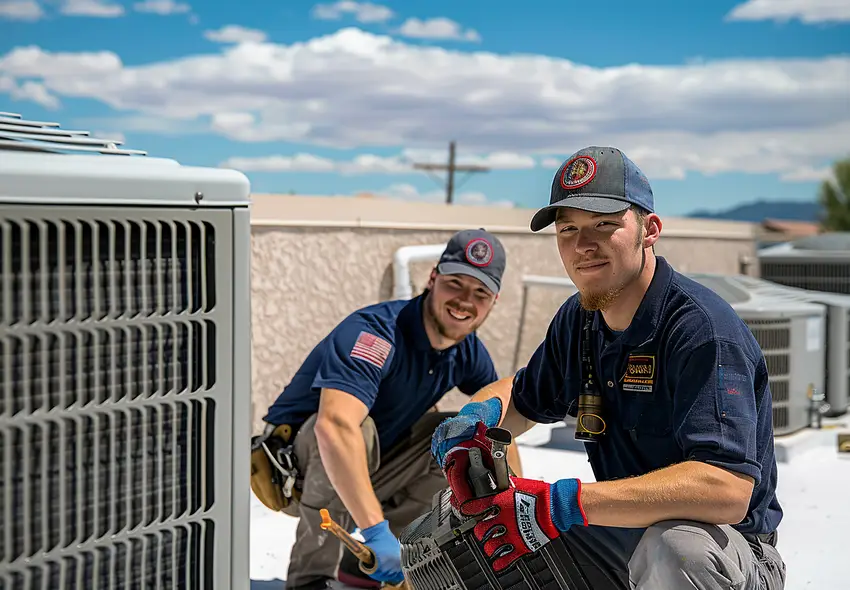
HVAC Technicians install, maintain, and repair heating, ventilation, air conditioning, and refrigeration systems in homes, offices, and industrial buildings. They work with modern diagnostic tools, smart thermostats, and energy-efficient systems to ensure comfortable indoor environments. This hands-on career requires technical skills, problem-solving abilities, and often involves completing an apprenticeship or vocational training. HVAC professionals work both independently and as part of teams, adapting to new technologies like smart home systems and environmentally friendly refrigerants.
Did you know?
HVAC work typically requires completing a Certificate III in Air-conditioning and Refrigeration through an apprenticeship program. These programs combine on-the-job training with classroom learning, allowing you to earn while you learn over 3-4 years.
At a glance
Typical average pay
$85,000 Avg/yr
Growth
Fast growing
Top skill
Operations Monitoring
Things to consider
Licensing and Certification Requirements
In Australia, HVAC technicians need specific licences to handle refrigerants and electrical components. You'll need to obtain an ARCtick licence for refrigeration work and may require electrical licensing for certain tasks.
Growing Industry Demand
With Australia's climate and increasing focus on energy efficiency, demand for skilled HVAC technicians is strong. Career progression can lead to supervisory roles, business ownership, or specialisation in areas like commercial refrigeration or renewable energy systems.
Key responsibilities
Establishing job requirements from drawings and specifications, and laying out installation reference points
Drilling holes, installing mounting brackets and cutting, bending and threading piping
Installing and repairing components such as compressors, motors, condensers, evaporators, switches and gauges, and copper lines for steam, gas, refrigerant, compressed air, oil and chilled water
Bolting, soldering, riveting, welding and brazing pipes to connect equipment, and checking alignment and accuracy of fit
Filling systems with gas or fluid to check for leaks