Carpet Installers
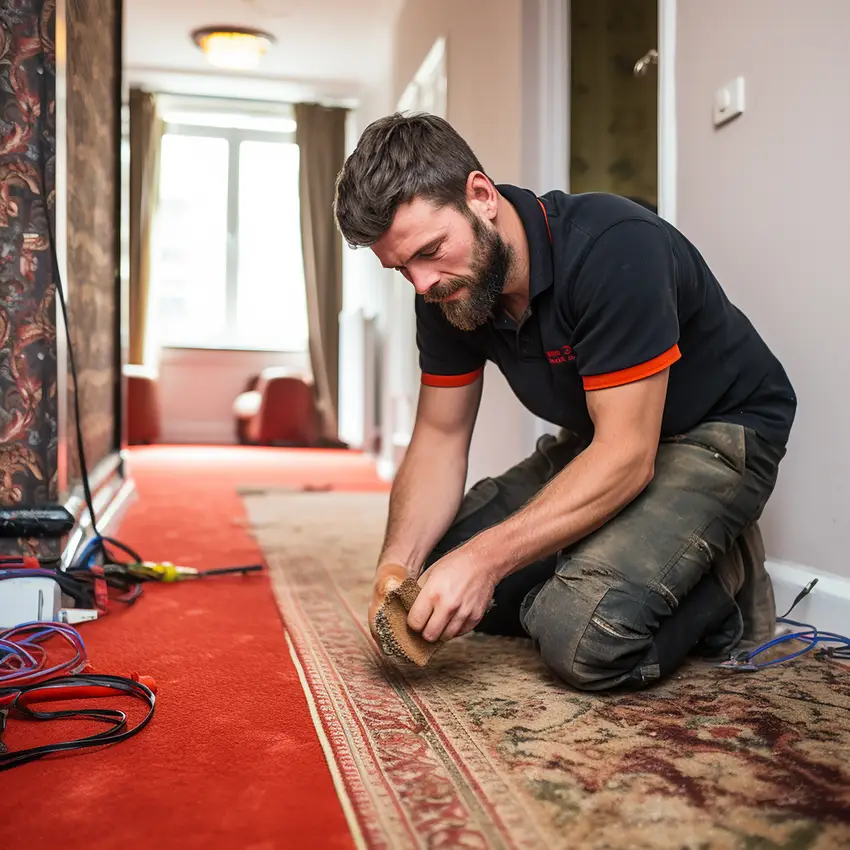
Carpet installers transform spaces by measuring, cutting, and laying carpet in homes, offices, and other buildings. They use specialized tools like carpet knives and heated irons to create precise cuts and seamless joins, while planning layouts to handle foot traffic and ensure the longest-lasting results. This hands-on job requires strong math skills for calculating materials, attention to detail for perfect fitting, and physical stamina for stretching and positioning heavy carpet rolls. Many installers work independently or for flooring companies, traveling to different job sites and collaborating with contractors and homeowners.
Did you know?
This occupation requires significant physical stamina, proper safety training, and adherence to OSHA regulations due to the labor-intensive nature of flooring installation and potential exposure to hazardous materials.
At a glance
Typical average pay
$48,700 Avg/yr
Growth
Stable
Top skill
Coordination
Things to consider
Market Volatility and Economic Sensitivity
Employment opportunities fluctuate with the housing market and construction industry cycles, making income potentially unstable during economic downturns.
Specialization and Certification Opportunities
Developing expertise in high-end materials like hardwood or eco-friendly options can lead to higher-paying positions and increased job security in competitive markets.
Key responsibilities
Stretch carpet to align with walls and ensure a smooth surface, and press carpet in place over tack strips or use staples, tape, tacks or glue to hold carpet in place.
Clean up before and after installation, including vacuuming carpet and discarding remnant pieces.
Join edges of carpet and seam edges where necessary, by sewing or by using tape with glue and heated carpet iron.
Cut and trim carpet to fit along wall edges, openings, and projections, finishing the edges with a wall trimmer.
Draw building diagrams and record dimensions.