Hearing Aid Specialists
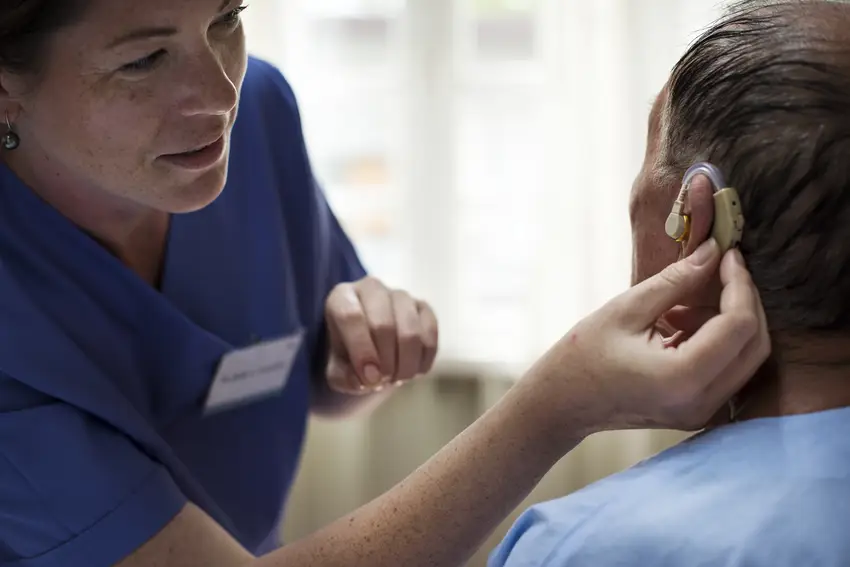
Hearing Aid Specialists help people with hearing loss by testing their hearing, selecting the right hearing aids, and creating custom ear molds for a perfect fit. They use advanced digital technology to program devices, train clients on how to use their new hearing aids, and work closely with audiologists and other healthcare professionals. This career combines technical skills with patient care, requiring knowledge of acoustics, electronics, and communication techniques. Most specialists complete specialized training programs and enjoy helping people reconnect with the sounds they love.
Did you know?
Most US states require hearing aid specialists to obtain specific licenses or certifications, with requirements varying significantly between states regarding education, training hours, and continuing education.
At a glance
Typical average pay
$63,000 Avg/yr
Growth
Fast growing
Top skill
Active Listening
Things to consider
Educational Pathway
Entry typically requires completion of a state-approved training program or apprenticeship, ranging from several months to two years, with some states accepting high school education plus on-the-job training.
Technology Advancement Impact
The field is rapidly evolving with digital hearing aids, smartphone integration, and telehealth services, requiring continuous learning to stay current with new technologies and fitting software.
Key responsibilities
Train clients to use hearing aids or other augmentative communication devices.
Diagnose and treat hearing or related disabilities under the direction of an audiologist.
Counsel patients and families on communication strategies and the effects of hearing loss.
Read current literature, talk with colleagues, and participate in professional organizations or conferences to keep abreast of developments in audiology.
Assist audiologists in performing aural procedures, such as real ear measurements, speech audiometry, auditory brainstem responses, electronystagmography, and cochlear implant mapping.