Semiconductor Processing Technicians
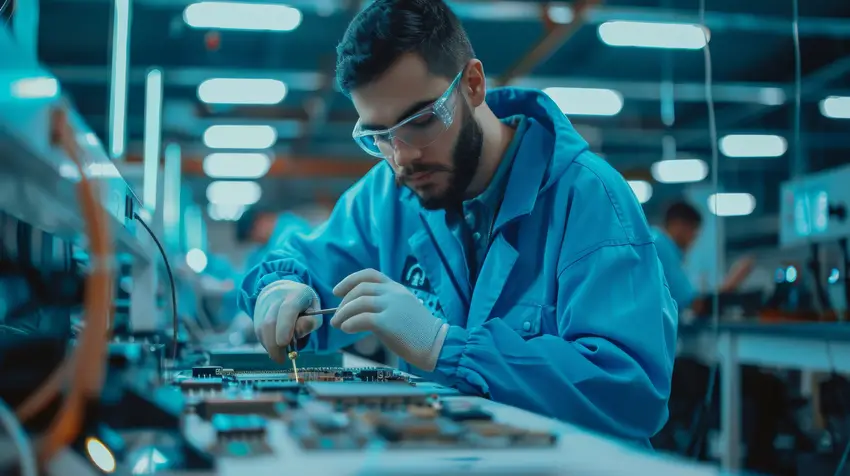
Semiconductor processing technicians help manufacture the tiny computer chips that power everything from smartphones to gaming consoles. You'll operate specialized equipment to grow silicon crystals, cut them into ultra-thin wafers, and use chemical baths and precision tools to create the microscopic circuits that make electronics work. This job requires attention to detail and technical skills as you work in ultra-clean facilities, collaborating with engineers and other technicians to ensure each chip meets exact specifications. Many technicians start with a high school diploma and receive on-the-job training or pursue an associate degree in electronics or engineering technology.
Did you know?
Most positions require an associate degree in electronics, engineering technology, or completion of specialized semiconductor manufacturing programs offered by community colleges and technical schools across the US.
At a glance
Typical average pay
$48,800 Avg/yr
Growth
Fast growing
Top skill
Operations Monitoring
Things to consider
Cleanroom Work Environment
The job requires working in sterile cleanroom facilities wearing protective suits for extended periods, demanding attention to detail and adherence to strict contamination control protocols.
Industry Growth and Job Security
The semiconductor industry in America is experiencing significant growth due to government initiatives like the CHIPS Act, creating strong job prospects and competitive salaries in key tech hubs.
Key responsibilities
Manipulate valves, switches, and buttons, or key commands into control panels to start semiconductor processing cycles.
Clean and maintain equipment, including replacing etching and rinsing solutions and cleaning bath containers and work area.
Measure and weigh amounts of crystal growing materials, mix and grind materials, load materials into container, and monitor processing procedures to help identify crystal growing problems.
Monitor operation and adjust controls of processing machines and equipment to produce compositions with specific electronic properties, using computer terminals.
Inspect equipment for leaks, diagnose malfunctions, and request repairs.